The Role of Alloying Elements in Precision Bearing Rolling Element Steel
1. Role of Silicon in GCr15 Bearing Steel
Silicon promotes the formation of body-centered cubic ferrite structure and prevents carbide formation in steel. Positioned to the left of iron on the periodic table, it primarily dissolves in iron. It has minimal effect on carbon's diffusion coefficient in austenite and little influence on austenite formation rate, though it raises the A1 point, thereby relatively slowing austenite formation. It slightly hinders or has no effect on austenite grain size during heating. It delays the pearlite transformation, shifting the C curve to the right and moving the nose of the C curve toward the high-temperature region. This lowers the Ms point, enhances the stability of undercooled austenite, thereby reducing the critical quenching cooling rate and improving the steel's hardenability. It significantly delays martensite decomposition at lower temperatures but does not slow decomposition during tempering at 400–500°C. It markedly inhibits carbide aggregation and impedes the elimination of various distortions during tempering. and generally delays the austenite's recovery, recrystallization, and carbide aggregation processes in quenched steel. This inhibits the reduction in hardness and strength, enhancing the steel's tempering stability. It can elevate the recrystallization temperature of the α phase, significantly enhance the temper brittleness of steel, alter the microstructure of various phases, and increase the quantity of pearlite. The primary objective is to increase the hardenability of steel. Fully hardened components can achieve high and uniform comprehensive mechanical properties after high-temperature tempering, particularly a high yield-to-tensile strength ratio. It significantly strengthens ferrite and can even improve the toughness of steel within a certain range.
2. Role of Chromium in GCr15 Bearing Steel
Chromium acts as an element that can close the γ phase region. When its content reaches a certain level, the γ phase region closes off. Even if the γ area on the phase diagram shrinks to a very small range, exceeding this content causes the alloy to undergo a γ-to-α phase transformation, favoring the formation of body-centered cubic ferrite structure. In steel, these elements can form carbides. As transition elements located to the left of iron in the periodic table, they reduce the carbon content at the steel's eutectoid point and the maximum solubility of carbon in the γ phase. Large additions can eliminate the γ phase entirely, resulting in a fully ferritic structure. It acts as a strengthening element by reducing carbon's diffusion coefficient in austenite, significantly delaying the pearlite-to-austenite transformation. In steel, the formation of insoluble carbides slows austenite formation, elevates the A1 point, and consequently moderates the rate of austenite development. Significantly elevates the recrystallization temperature of the α phase, causing pronounced temper brittleness in steel. Strongly inhibits further martensite decomposition, alters the microstructure of steel phases, and increases pearlite content. It increases the steel's hardenability. Fully hardened components can achieve high and uniform comprehensive mechanical properties after high-temperature tempering, particularly a high yield-to-tensile strength ratio. It significantly strengthens ferrite and can even enhance the steel's toughness within a certain range. If insoluble special carbides form, insufficient holding time during heating will result in a highly non-uniform austenite structure. Moderately inhibits austenite grain growth during heating, delays pearlite transformation, lowers the Ms point, and enhances the stability of undercooled austenite. This reduces the critical quenching cooling rate and improves the steel's hardenability. Significantly impedes carbide aggregation and inhibits the elimination of various distortions during tempering. Generally delays the austenite's recovery, recrystallization, and carbide aggregation processes in quenched steel, thereby suppressing the reduction in hardness and strength. Enhances the role of manganese in 5.3 GCr15 bearing steel.

The γ phase region can be activated; if it reaches a certain quantity, it can completely suppress the appearance of the α phase region, replacing it with the γ phase. Therefore, if the r region is quenched to room temperature, austenite is easily obtained. It can increase the recrystallization temperature of the α phase, causing significant temper brittleness to appear in the steel. It can alter the microstructure of the steel phases and increase the amount of pearlite. Transition elements, positioned to the left of iron in the periodic table, can form carbides in steel. These carbides lower the A3 and A1 temperatures. and when added in large quantities, can even lower A3 below room temperature. This allows the steel to retain an austenitic structure at room temperature. It can alter the transformation temperature, lowering the A1 point. Relatively speaking, it increases the degree of superheat, thereby accelerating the formation of austenite. It can refine the pearlite, which is beneficial for austenite formation, and is advantageous for the grain size of austenite during heating. It can delay the pearlite transformation, lower the Ms point, and enhance the stability of undercooled austenite. This reduces the critical quenching cooling rate and improves the steel's hardenability. To increase hardenability, fully quenched components can achieve high and uniform comprehensive mechanical properties after high-temperature tempering, particularly a high yield-to-tensile strength ratio. It significantly strengthens ferrite and, within a certain range, can also improve the steel's toughness.
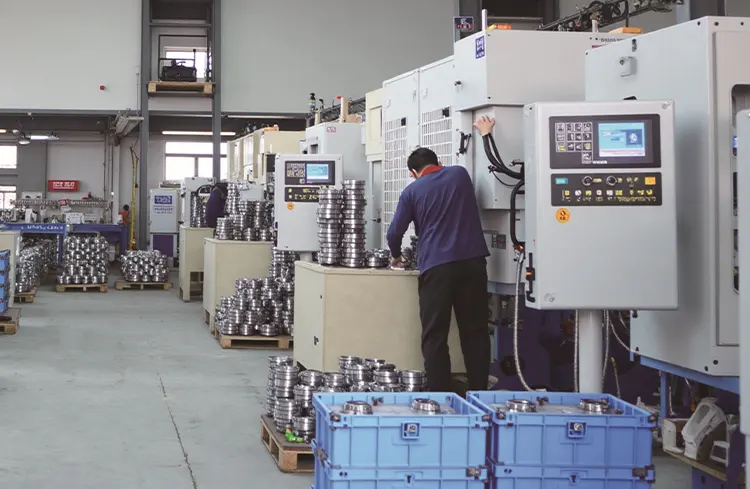
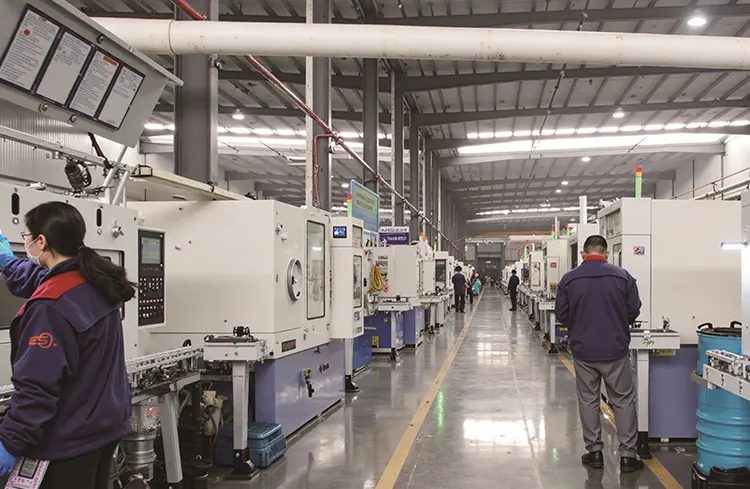
Shanghai Yisiou Trading Co., Ltd. is a powerful enterprise with a registered capital of 5 million RMB. Its product matrix includes ceramic bearings, hybrid ceramic bearings, solid oil bearings, tapered roller bearings, cylindrical roller bearings, etc. The products are widely used in aerospace, automotive and other fields, and have reliable performance under extreme conditions. The company is customer-centric and holds an important position in the industry.

Leave A Comment