The Effect of Surface Treatment on the Performance of Cylindrical Roller Bearing Components
The working surfaces and core regions of cylindrical roller bearing components exhibit significant differences in their required states, structures, and performance characteristics. Conventional heat treatment often fails to address these variations comprehensively, preventing the full exploitation of the material's potential. The application of surface strengthening techniques not only effectively resolves the structural and performance disparities between surfaces and cores but also enables the surface to acquire specific functional properties. This ensures the bearing meets the performance demands of its working surface under particular operating conditions. This holds significant value in the advancement of modern science and technology. Traditional surface strengthening methods fall within the scope of heat treatment processes. However, contemporary surface strengthening techniques such as laser, electron beam, and ion beam treatments not only apply high-tech innovations to material surface enhancement but also transcend conventional heat treatment boundaries, establishing new technological domains. Consequently, contemporary surface strengthening technologies can be classified in multiple ways from different perspectives. Based on the physicochemical processes involved in surface layer strengthening, they can be broadly categorized into five major types: surface deformation strengthening, surface heat treatment strengthening, chemical heat treatment strengthening, surface metallurgical strengthening, and surface film strengthening.
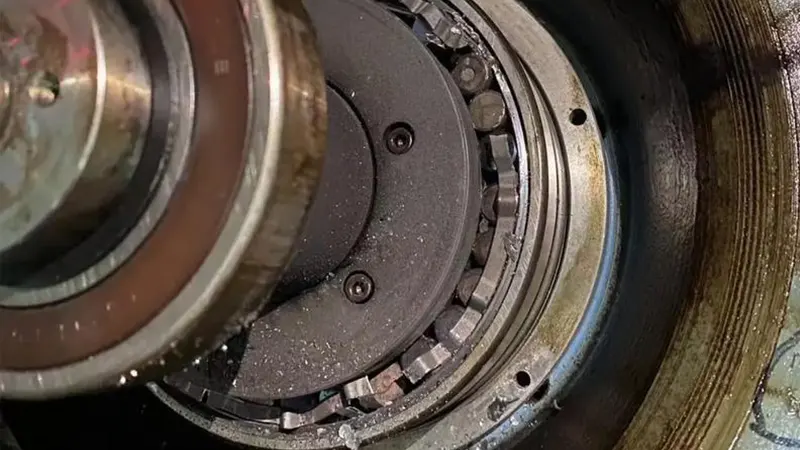
Surface deformation strengthening, also known as work hardening, is a surface enhancement method that induces plastic deformation in the surface layer of metals through mechanical means, thereby forming a high-hardness and high-strength hardened layer. This process encompasses techniques such as shot peening, sandblasting, cold extrusion, rolling, cold rolling, impact strengthening, and explosive impact strengthening. These methods are characterized by increased dislocation density and refined subgrain structure within the hardened layer, leading to enhanced hardness and strength. They also reduce surface roughness values, significantly improving surface fatigue strength and reducing fatigue notch sensitivity. This strengthening process is simple yet highly effective, with no distinct boundary between the hardened layer and the base material. The continuous structure minimizes the risk of flaking during use. Most of these methods have been applied in the bearing industry: surface impact strengthening of rolling elements exemplifies such applications, while precision rolling has emerged as a novel method for both ring processing and strengthening.
Surface heat treatment, commonly known as surface quenching, involves rapidly heating the surface layer of components to induce solid-state phase transformations. This includes flame heating quenching, high (or medium) frequency induction heating quenching, laser heating, or electron beam heating quenching. These methods feature localized surface heating for quenching, resulting in minimal workpiece deformation; rapid heating for high production efficiency; and short heating times that cause only slight surface oxidation and decarburization.
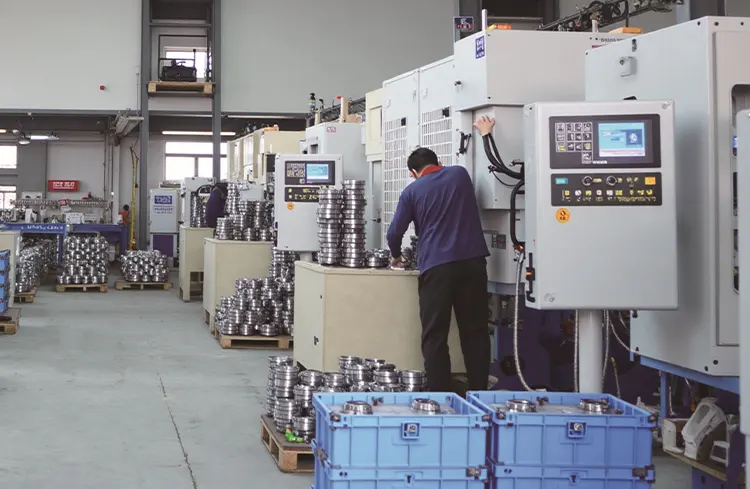
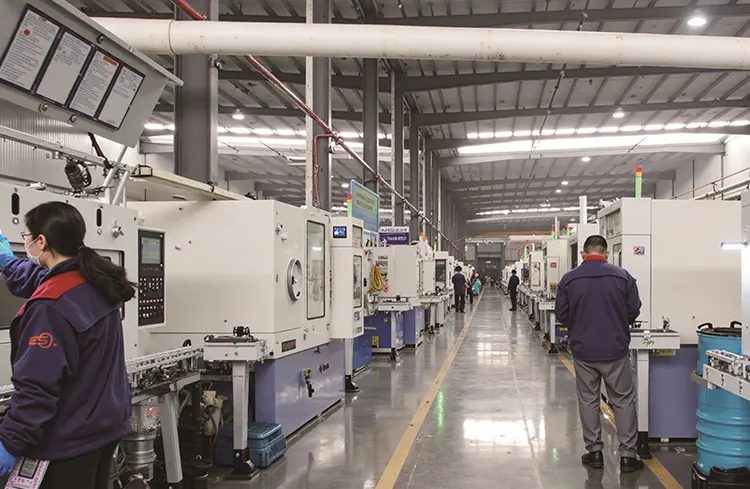
Shanghai Yisiou Trading Co., Ltd. is a powerful enterprise with a registered capital of 5 million RMB. Its product matrix includes ceramic bearings, hybrid ceramic bearings, solid oil bearings, tapered roller bearings, cylindrical roller bearings, etc. The products are widely used in aerospace, automotive and other fields, and have reliable performance under extreme conditions. The company is customer-centric and holds an important position in the industry.

Leave A Comment